


IPX3 and IPX4 Water Ingress Testing: Oscillating Tube and Spray Nozzle System Guide
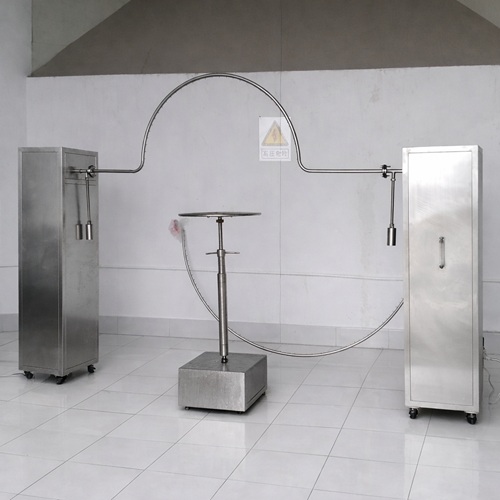
IEC 60529 defines the IP Code used to classify the protection provided by electrical equipment enclosures against access, solid objects and water. IPX3 evaluates protection against spraying water, while IPX4 evaluates protection against splashing water from all directions. Depending on the product size and the applicable method, testing may use an oscillating tube or a standardized spray nozzle.
Oscillating tube or spray nozzle?
An oscillating tube provides repeatable automated coverage and is widely used for appliances, lighting products, medical equipment and electrical enclosures. A spray nozzle is useful for large samples, unusual installation positions or areas that cannot be covered by the available tube radius. The correct method must be selected from the applicable product standard and the specimen geometry.
Main components of an IPX3/IPX4 system
- Interchangeable oscillating tubes or the required spray-nozzle assembly;
- Stainless-steel piping, filtration and pressure/flow regulation;
- Flow meters, pressure indication and verification connections;
- Adjustable sample turntable and positioning fixture;
- PLC or touchscreen control for angle, speed, duration and water supply;
- Water tank, recirculation, drainage and splash containment;
- Electrical safety protection for energized-sample testing.
Factors that affect repeatability
Blocked holes, bent tubes, uneven flow distribution, incorrect sample position and turntable-speed errors can all change the exposure. Recirculated water should be filtered and the tank cleaned regularly. The system should provide a practical method for periodic flow verification so the laboratory can confirm that the test condition remains within specification.
Energized samples and electrical safety
Some products are tested while operating. The laboratory must evaluate isolation, residual-current protection, grounding, cable routing and safe access. Large electrical or medical products may require custom power feedthroughs, support fixtures and post-test inspection arrangements.
IPX testing is not automatically equivalent to a UL rain test
UL rain tests and IEC 60529 IPX3/IPX4 tests may use different nozzle structures, layouts, exposure conditions and product-specific requirements. A purchasing decision should be based on the exact certification standard rather than the general term “rain test.”
Laboratory layout recommendations
Use a slip-resistant floor, reliable drainage, splash barriers and a dedicated protected electrical supply. The control cabinet should be outside the direct spray zone. Mobile turntables and adjustable specimen supports improve changeover efficiency for laboratories that test many product sizes.
Related LSKFT equipment
See the IPX3/4 Oscillating Tube Rain Test Device, IPX5/6 Water Flushing Protection Test Device and UL Rain Test Device.
Frequently asked questions
Is the largest oscillating tube always the best choice?
No. Tube radius should match the specimen size, allowed method and laboratory space while keeping the specimen in the specified exposure area.
Can recirculated water be used?
Yes, when the system includes suitable filtration, cleaning and flow verification to prevent blocked holes and changing distribution.
LSKFT supplies open oscillating-tube systems, enclosed rain chambers, spray-nozzle devices, automotive rain rooms and customized ingress-protection test solutions.