


IEC 62133-2 and GB 31241 Battery Safety Laboratory: Equipment Planning Guide
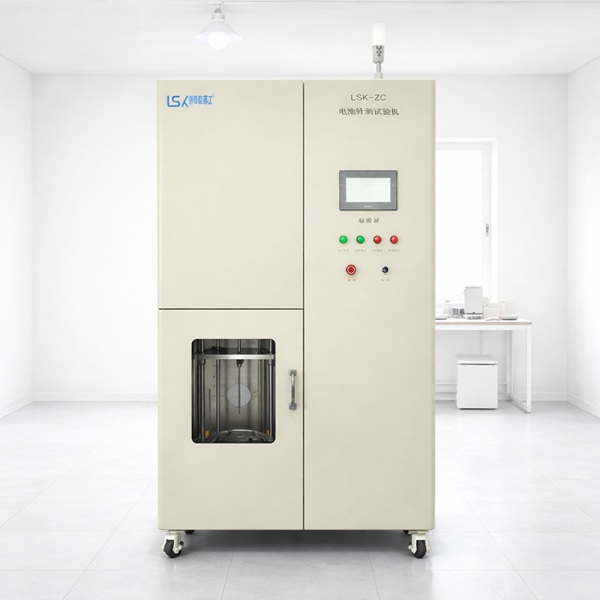
IEC 62133-2:2017+A1:2021 specifies safety requirements and tests for portable sealed secondary lithium cells and batteries. China GB 31241-2022 applies to lithium-ion cells and batteries used in portable electronic equipment and has been effective since 2024. Transport programs may additionally reference UN 38.3. These documents do not contain identical test scopes, so an effective laboratory begins with a standards matrix and product-risk assessment.
Start with the product envelope
The laboratory should define the largest cell or battery pack, maximum voltage, maximum available short-circuit current, energy level, environmental range and expected failure severity. Portable cells, consumer battery packs, propulsion batteries and energy-storage modules require very different chamber sizes, current ratings and safety controls.
Recommended laboratory zones
- Sample receiving and conditioning: identification, visual inspection, state-of-charge preparation and storage;
- Electrical performance area: charge-discharge systems, voltage, current, internal resistance and temperature acquisition;
- Mechanical abuse area: crushing, nail penetration, drop and impact equipment;
- Thermal and environmental area: thermal abuse, temperature cycling, high-low temperature and low-pressure testing;
- Electrical abuse area: external short circuit, overcharge or forced-discharge equipment as applicable;
- Protected observation and response area: explosion protection, ventilation, video monitoring and emergency handling.
Typical equipment modules
Common systems include temperature-controlled external short-circuit testers, thermal-abuse chambers, nail-penetration machines, crushing machines, drop testers, forced internal short-circuit machines, burning apparatus, explosion-proof temperature chambers, low-pressure chambers and impact testers. The exact list should be derived from the applicable standard and the cell or battery category.
Critical specification questions
For an external short-circuit tester, confirm loop resistance, current capacity, contactor rating, temperature control, cable size and emergency interruption. For crushing or nail penetration, confirm maximum force, speed, travel, fixture geometry and explosion chamber dimensions. Environmental chambers require suitable temperature uniformity, ramp performance, venting and electrical feedthroughs.
Safety is part of the laboratory, not an accessory
Lithium battery abuse tests may produce smoke, flame, ejected material or explosion. The design should consider pressure relief, protected viewing, independent exhaust, gas or smoke detection, video monitoring, remote operation, door interlocks, emergency stop and a site-appropriate fire response plan. Equipment spacing must allow maintenance and emergency access.
Data synchronization and traceability
Voltage, current, temperature, force, displacement, time and chamber conditions should be recorded on a common time base. Video synchronized with the data curve is valuable for identifying the exact moment of venting, ignition or structural failure. Test records should include sample state of charge, conditioning history, test recipe and abnormal events.
Related LSKFT equipment
See the Battery Nail Penetration Test Machine, Temperature-Controlled Battery External Short-Circuit Tester and Battery Thermal Abuse Test Chamber.
Frequently asked questions
Can IEC 62133-2 and UN 38.3 share equipment?
Some equipment can be shared, but sample preparation, parameters, sequence and acceptance criteria must be managed as separate procedures.
Should equipment be purchased before the room layout is finalized?
No. Define the standards, risk controls, ventilation, power and floor plan first, then confirm equipment dimensions and interfaces.
LSKFT provides equipment selection, custom explosion-resistant structures, controls, data acquisition and integrated battery-laboratory solutions.