


IEC 60879:2019+A1:2025 Fan Performance Measurement Room: Design and Equipment Guide
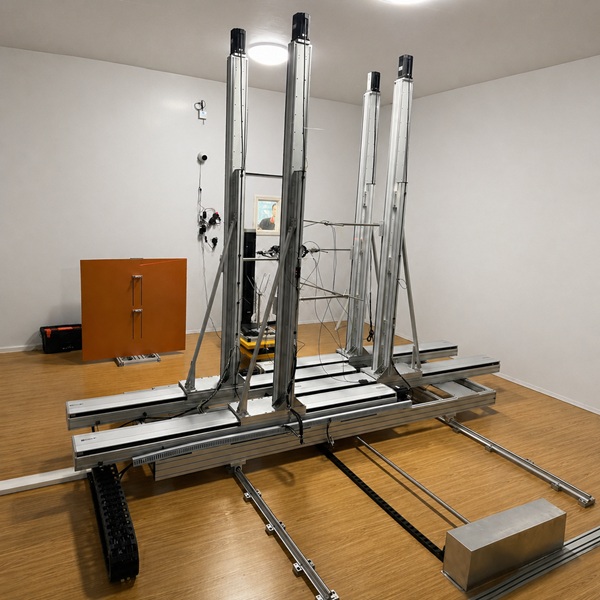
IEC 60879:2019, together with Amendment 1 published in 2025, specifies methods for measuring the performance of comfort fans and their regulators. The scope includes common products such as table, pedestal, wall, louvre, tower and bladeless fans, as well as ceiling fans. Because these products create very different airflow patterns, a useful laboratory must be designed around the applicable measurement method rather than a single generic room layout.
Why the room matters
Low air velocities are easily affected by air-conditioning outlets, open doors, people moving nearby, equipment heat and the position of surrounding walls. Even a high-accuracy sensor cannot compensate for a disturbed test environment. The room should therefore minimize background airflow and allow the sample, measurement grid and operator to be positioned consistently.
Core measurement functions
- Air-velocity measurement at defined locations;
- Temperature and humidity monitoring;
- Input voltage, current, power and power-factor measurement;
- Rotational-speed measurement when required;
- Test duration and fan operating-state recording;
- Automatic averaging, calculation, curve display and report generation.
Tower fans and bladeless fans
Tower and bladeless fans have elongated or distributed outlets. Their vertical airflow profile, oscillation mode and speed setting must be controlled carefully. The test fixture should allow repeatable alignment of the product centerline and outlet height. The procedure should clearly define whether oscillation is locked, active or positioned at a specified angle.
Ceiling fans require a different approach
Ceiling fans are not tested in the same arrangement as portable comfort fans. Installation height, measurement geometry and room dimensions must be planned specifically for the ceiling-fan method. A laboratory that tests both product groups may need separate fixtures and measurement structures rather than one compromise arrangement.
Recommended laboratory equipment
- Calibrated air-velocity sensors with adjustable and repeatable positioning;
- Rigid measurement frames with coordinate markings;
- Temperature and humidity acquisition;
- Precision power analyzer and suitable power supply interface;
- Rotational-speed sensor and test timer;
- Software for test recipes, raw-data storage, calculations and report export;
- Quick-change sample fixtures for different fan categories.
Improving repeatability
Repeatability depends on the complete test process. The laboratory should standardize sample conditioning, warm-up time, speed setting, regulator position, measurement duration, sensor coordinates and room stabilization time. A reference fan can be used for periodic system checks. Empty-room background velocity should also be recorded when the environment or ventilation system changes.
Using the room for product development
A performance room is valuable beyond compliance testing. Engineers can compare blade geometry, outlet grille design, motor control, oscillation strategy and power consumption. Saving airflow profiles and electrical data for each prototype helps development teams understand the trade-off between airflow, energy use, noise and user comfort.
Related LSKFT equipment
See the IEC 60879 Tower Fan and Electric Fan Performance Measurement Room, Electric Fan Performance Test Device and Ceiling Fan Airflow Tester.
Frequently asked questions
Can one fixed room size be used for every fan?
Not reliably. The largest product, measurement distance, sensor frame, operator space and applicable test method should determine the layout.
Can the software generate customer-specific reports?
Yes. LSKFT can configure data fields, calculations, charts and report templates after the test procedure is confirmed.
LSKFT provides room layout, measurement frames, sensors, power analyzers, data acquisition, software and commissioning as an integrated fan-performance laboratory solution.