


EV Charger and Charging Gun Electrical Safety Test Laboratory Solution
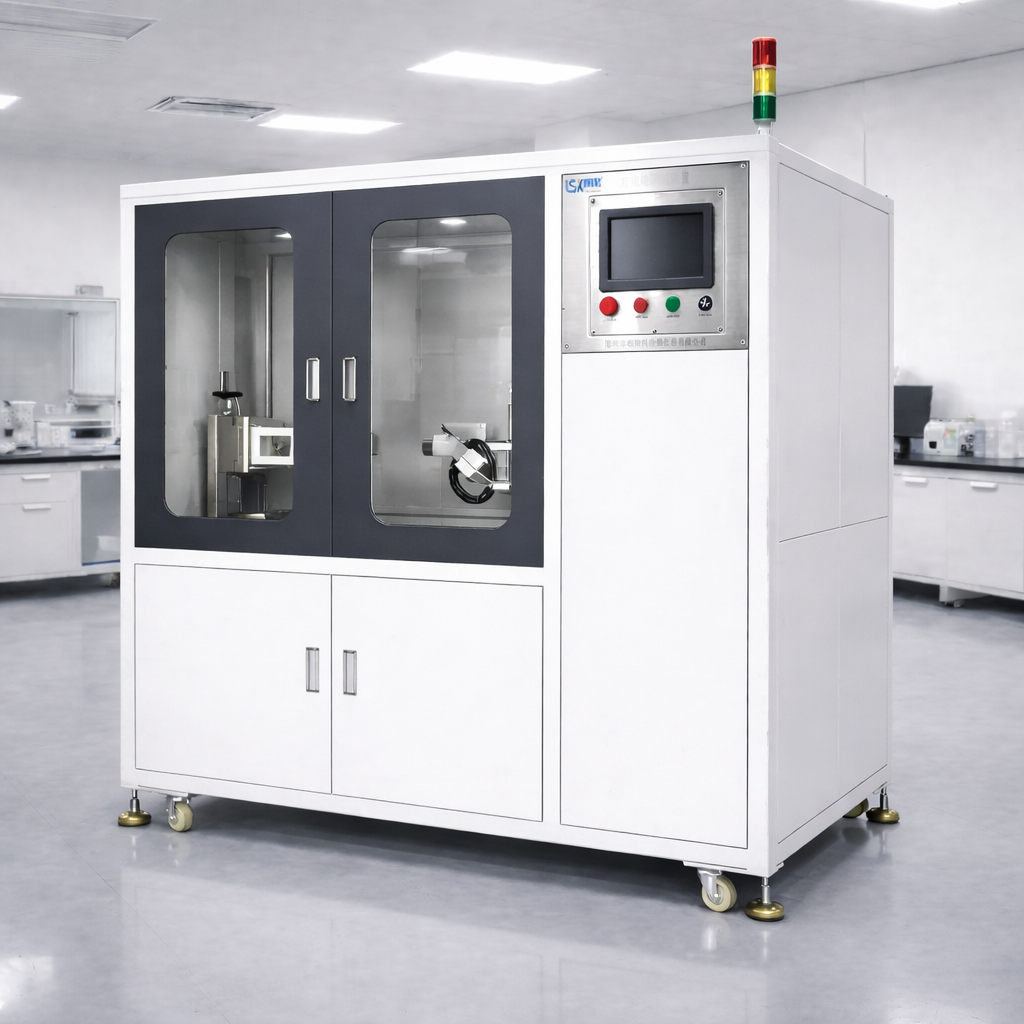
Overview
EV chargers, charging guns, vehicle inlets and charging connector assemblies must remain safe and stable under repeated plugging, high-current operation, outdoor exposure and long-term service conditions. A complete EV charger and charging gun electrical safety test laboratory should not focus on only one test item. It should combine mechanical endurance testing, temperature rise measurement, cable bending, locking mechanism verification, IP waterproof and dustproof testing, and environmental reliability evaluation.
Shenzhen LSKFT Testing Instruments Co., Ltd. provides customized testing equipment and turnkey laboratory configuration support for EV charging components. The solution can be adjusted according to rated current, connector structure, sample size, testing frequency and automation requirements.
Applicable Products
- AC and DC EV chargers, wall-mounted charging stations and portable charging devices;
- EV charging guns, charging plugs, vehicle inlets and socket-outlet assemblies;
- Charging cables, terminals, locking mechanisms and protective components;
- Outdoor charging equipment housings, control panels and sealing structures.
Recommended Test Equipment
| Test Direction | Recommended Equipment | Key Technical Points |
| Mechanical endurance | Charging gun insertion and withdrawal life test machine | Insertion speed, withdrawal force, test cycles, automatic counting and abnormal stop protection |
| Temperature rise | High-current temperature rise test system | Multi-point temperature acquisition, stable current output and curve recording |
| Cable bending and tension | Cable bending tester and tensile force test device | Bending angle, load, cycle number, fixture design and failure judgment |
| IP protection | Water spray test equipment and dust test chamber | Water pressure, flow rate, dust circulation, sample installation and drainage system |
| Environmental reliability | Temperature and humidity test chamber | High temperature, low temperature, humidity cycling and material aging assessment |
Laboratory Layout Recommendations
The laboratory can be divided into an electrical safety area, mechanical endurance area, IP protection area, environmental reliability area, sample preparation area and data management area. High-current temperature rise systems require stable power supply, grounding, heat dissipation and emergency stop protection. Mechanical endurance equipment should be equipped with protective covers, quick-change fixtures and test status indicators.
For outdoor charging equipment, IP waterproof and dustproof testing should be planned together with environmental reliability testing. This allows the laboratory to evaluate sealing performance before and after temperature or humidity exposure, which is closer to real service conditions.
Automation and Data Management
A modern EV charging component test laboratory should record sample information, test parameters, cycle numbers, temperature curves, current values, alarm events and final judgment results. For manufacturers with batch testing requirements, barcode management, permission control, report export and remote monitoring functions can be added.
LSKFT Solution Advantages
- Customized fixtures for different charging gun and connector structures;
- Integration of mechanical endurance, electrical safety, temperature rise, IP protection and environmental reliability tests;
- Stable industrial control system with clear operation interface and data recording;
- Turnkey support from solution design, equipment manufacturing, installation to operator training.
For EV charger, charging gun or charging connector test laboratory projects, LSKFT can provide a tailored equipment list and technical configuration based on your sample specifications and testing requirements.